


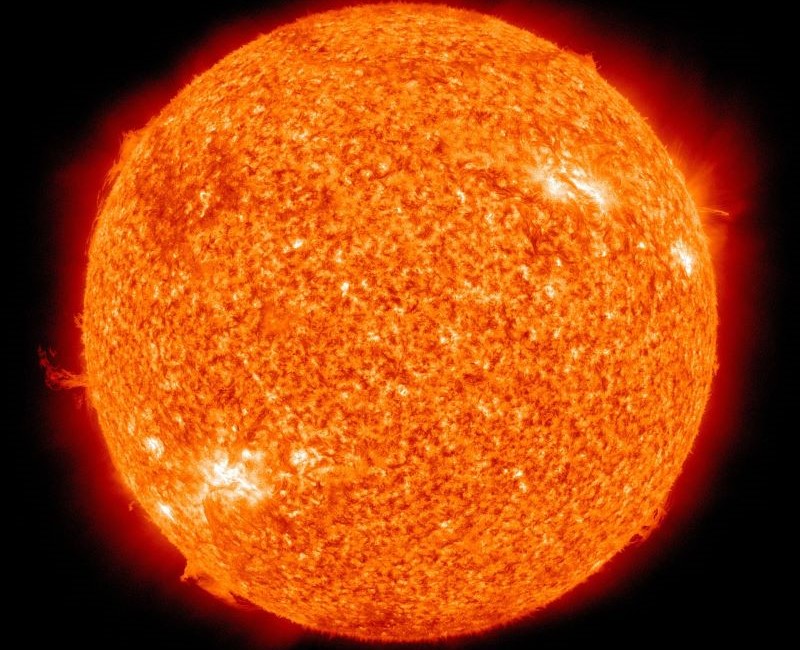
Powerful solar storm headed towards Earth, likely to cause blackouts
A powerful stream of energised particles (called solar storm) released by the Sun is headed towards the Earth having the potential to radio blackouts and aurora borealis or northern lights.
According to NASA's spaceweather.com, the storm emanated from the sunspot AR3664 on May 27 and was a class X2.8, making it one of the most intense solar events in recent years.
X-class solar flares are the strongest, which are described by NASA as "giant explosions on the sun that send energy, light and high speed particles into space".
Earth has already experienced interruption in shortwave radio due to the solar storm, but thankfully coronal mass ejection (CME) from the latest eruption will not impact our planet.
This starburst caused a huge coronal mass ejection to erupt on the side of the Sun facing away from us, Ryan French, a solar physicist at the National Solar Observatory in Boulder, Colorado, wrote on X.
A solar storm travels toward Earth at the speed of light and ionises (gives an electrical charge to) the top of the planet's atmosphere when it reaches us.
This ionisation causes a higher-density environment for the high-frequency shortwave radio signals to navigate through to support communication over long distances.
Support Our Journalism
We cannot do without you.. your contribution supports unbiased journalism
IBNS is not driven by any ism- not wokeism, not racism, not skewed secularism, not hyper right-wing or left liberal ideals, nor by any hardline religious beliefs or hyper nationalism. We want to serve you good old objective news, as they are. We do not judge or preach. We let people decide for themselves. We only try to present factual and well-sourced news.
Support objective journalism for a small contribution.


