


 MentalHealth
New UN guide helps support perinatal mental healthcare in 'stigma-free' environment
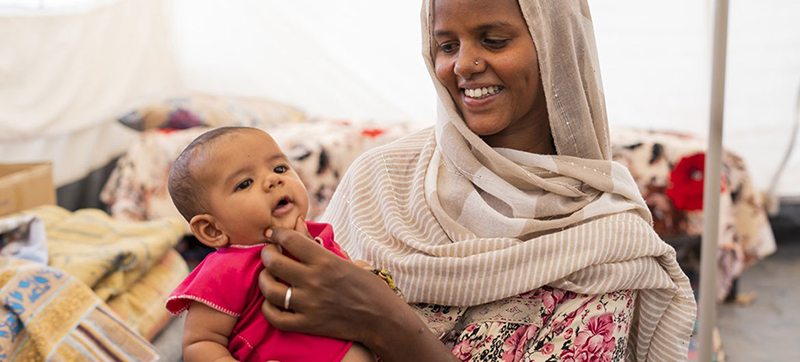
New York: Almost one in five women will experience a mental health condition during pregnancy or in the year after the birth, the UN health agency said on Monday, launching new recommendations for health authorities worldwide, to help improve women’s lives.
Life-altering moments like pregnancy, birth, and early parenthood can be stressful for women and their partners, according to the World Health Organization (WHO).
It can trigger a period of poor mental health or lead to a worsening of previous mental health conditions.
Moreover, among women with perinatal mental health conditions – just before and shortly after giving birth – around 20 per cent will experience suicidal thoughts or undertake acts of self-harm, said WHO.
Guiding with cultural sensitivity
Ignoring mental fitness not only risks women’s overall health and well-being, but also impacts infants’ physical and emotional development.
The UN health agency’s new guide for integration of perinatal mental health in maternal and child health services upholds that good mental health can improve health outcomes and the quality of maternal and child health services for all women.
And it compliments other services, including screening, diagnosis and management of PMH conditions into maternal and child health (MCH) – highlighted in the Nurturing Care Framework; WHO recommendations on maternal and newborn care for a positive postnatal experience; and the WHO guideline on improving Early Childhood Development.
The guide provides the best available information aimed at supporting MCH providers in identifying symptoms of mental health problems and responding in a way that is adapted to their local and cultural context.
Planning guide
“The guide provides an evidence-informed approach for planning the integration of perinatal mental healthcare into MCH services and assessing its impact,” said the UN health agency.
WHO outlined that effective integration requires, for example, a core team responsible to oversee it, a situation analysis and needs assessment to identify a feasible package of interventions that meet women’s needs during the perinatal period, and adequate workforce training and supervision to deliver services.
“MCH services during the perinatal period represent a unique opportunity to support women in a respectful and stigma-free environment,” said the UN health agency.
This, in turn, leads to increased attendance and better engagement in care for women and their babies and greater well-being and advancement of society.
Support Our Journalism
We cannot do without you.. your contribution supports unbiased journalism
IBNS is not driven by any ism- not wokeism, not racism, not skewed secularism, not hyper right-wing or left liberal ideals, nor by any hardline religious beliefs or hyper nationalism. We want to serve you good old objective news, as they are. We do not judge or preach. We let people decide for themselves. We only try to present factual and well-sourced news.
Support objective journalism for a small contribution.


