


 Cancer
Australian techie uses ChatGPT and AI to create an experimental cancer vaccine for his dog
While some fear that artificial intelligence could lead to job losses and mass layoffs, for others it is emerging as a powerful tool — even helping in the fight against deadly diseases such as cancer.
An Australian tech expert has used AI tools, including ChatGPT and AlphaFold, developed by Google DeepMind, to create an experimental vaccine for his cancer-stricken dog that had been given only a few months to live.
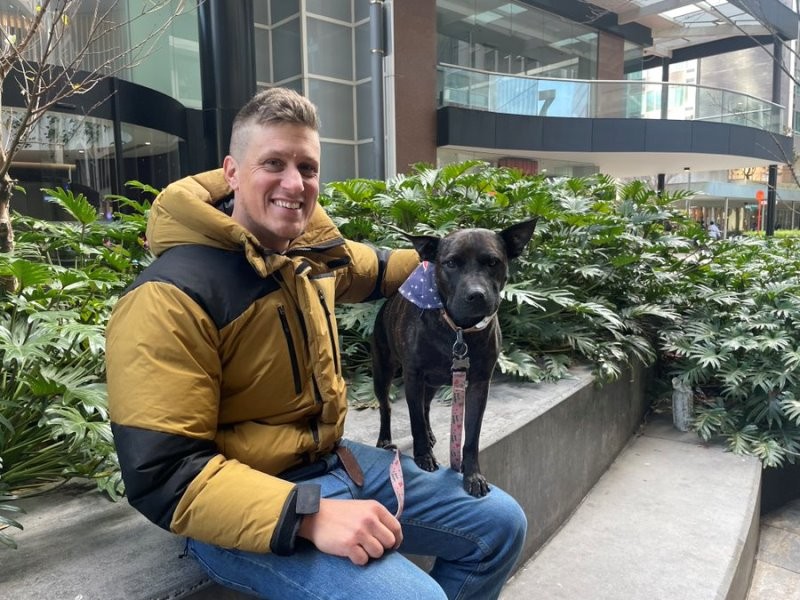
Tech entrepreneur Paul Conyngham adopted rescue dog Rosie from an animal shelter in 2019. His world was turned upside down when the dog was diagnosed with aggressive mast cell cancer in 2024.
Conyngham spent thousands of dollars on veterinary chemotherapy and surgery, which managed to slow the disease but failed to shrink the tumours.
However, an experimental AI-designed vaccine has now given hope to researchers after the tennis ball-sized tumour on Rosie’s hock reportedly shrank by half, according to media reports.
“It was like holy crap, it worked!” said Martin Smith, associate professor of computational biology and director of the Ramaciotti Centre for Genomics at the University of New South Wales, in an interview with The Australian.
A lot of people have been asking if this can be done for their dogs and for people. I'm speaking with everyone involved to see what is possible here.
— Paul S. Conyngham (@paul_conyngham) March 14, 2026
If you would like to be involved, please complete the following Google form:https://t.co/qs9WwDNgBH pic.twitter.com/ANvxF9LX47
“It raises the question: if we can do this for a dog, why aren’t we rolling this out to all humans with cancer? It gives hope to a lot of people, and it’s something we’re passionate about pursuing,” Smith said.
Seeking ways to help his dog, Conyngham turned to AI chatbots and eventually used artificial intelligence to analyse gigabytes of genetic data and design a blueprint for a personalised mRNA vaccine.
He collaborated with leading Australian scientists to manufacture the vaccine in laboratories at the University of New South Wales. He also located the only veterinary researcher with ethics approval to administer the experimental treatment, according to The Australian.
Conyngham, who has spent 17 years working in machine learning and data analysis, paid about $3,000 for Rosie’s genomic sequencing before beginning to analyse the data.
“I went to ChatGPT and came up with a plan on how to do this,” he told the newspaper.
“The first step was to get Rosie’s DNA sequenced. You take healthy DNA from the blood and DNA from the tumour and sequence both to see exactly where the mutations have occurred. It’s like comparing the original engine of a car with the same engine after 300,000 kilometres — you can see where the damage is.”
After the sequencing was completed, Conyngham ran the data through multiple analysis pipelines to identify the mutations.
“I then used other algorithms to find drugs that might treat the cancer,” he explained.
At the Ramaciotti Centre for Genomics, Associate Professor Smith said he was astonished that a technology expert with no formal background in biology had managed to analyse the complex data.
“He called and told me he had analysed the data, found mutations of interest and then used AlphaFold to identify the mutated proteins,” Smith said.
“He then identified potential targets and matched them to drugs, and asked if I could help find someone to synthesise the compound he had identified. I thought, ‘Wow, that’s incredible!’”
Páll Thordarson, director of the UNSW RNA Institute, said the development was groundbreaking.
“This is the first time a personalised cancer vaccine has been designed for a dog,” he said.
“This kind of work sits at the frontier of cancer immunotherapy. Ultimately, the goal is to use these technologies to help humans. What Rosie is showing us is that personalised medicine can be highly effective and developed in a relatively short timeframe using mRNA technology.”
Rosie received her first vaccine dose in December followed by a booster shot.
According to the report, Conyngham is now working on a second vaccine designed to target a large tumour that did not respond to the initial treatment.
Support Our Journalism
We cannot do without you.. your contribution supports unbiased journalism
IBNS is not driven by any ism- not wokeism, not racism, not skewed secularism, not hyper right-wing or left liberal ideals, nor by any hardline religious beliefs or hyper nationalism. We want to serve you good old objective news, as they are. We do not judge or preach. We let people decide for themselves. We only try to present factual and well-sourced news.
Support objective journalism for a small contribution.


