


On the road to finding other Earths
Some astronomers think the discovery of Earth's true analogs may be around the corner. What are the next steps to search for life on these potentially habitable worlds?
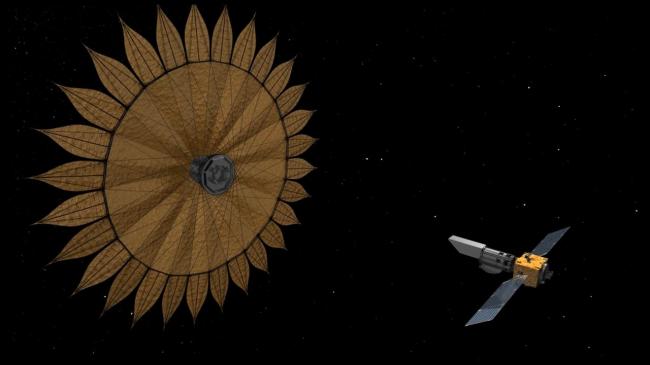
Scientists and engineers are actively working on two technologies to help with this challenge: the starshade, a giant flower-shaped spacecraft; and coronagraphs, single instruments that fit inside telescopes. Both a starshade and a coronagraph block the light of a star, making it easier for telescopes to pick up the dim light that reflects off planets. This would enable astronomers to take pictures of Earth-like worlds -- and then use other instruments called spectrometers to search the planets' atmospheres for chemical clues about whether life might exist there.
A new JPL "Crazy Engineering" video visits both technologies at NASA's Jet Propulsion Laboratory in Pasadena, California.
"Coronagraphs are like visors in your car -- you use them to block the light of the sun so you can see the road," said Nick Siegler, the program chief technologist for NASA's Exoplanet Exploration Program Office at JPL. "Starshades, on the other hand, are separate spacecraft that fly in front of other telescopes, so they are more like driving behind a big truck in front of you to block the light of the sun." Siegler is featured in the Crazy Engineering video.
The starshade would be a large structure about the size of a baseball diamond that deploys in space and flies in front of a space telescope.
Support Our Journalism
We cannot do without you.. your contribution supports unbiased journalism
IBNS is not driven by any ism- not wokeism, not racism, not skewed secularism, not hyper right-wing or left liberal ideals, nor by any hardline religious beliefs or hyper nationalism. We want to serve you good old objective news, as they are. We do not judge or preach. We let people decide for themselves. We only try to present factual and well-sourced news.
Support objective journalism for a small contribution.


