
May 10, 2026 02:38 pm (IST)
Follow us:
facebook-white sharing button
twitter-white sharing button
instagram-white sharing button
youtube-white sharing button
Big defence boost: India successfully tests advanced Agni MIRV missile | India, Singapore unite for tough action against terror and transnational crime | TVK crosses majority mark with VCK, IUML support | I bow before Bengal: PM Modi’s powerful gesture at Suvendu Adhikari’s oath goes viral | Bengal turns a new page: Suvendu Adhikari takes oath as CM amid massive NDA show of strength | Cloud over Tamil Nadu government formation as Governor asks Vijay to prove majority | 1 Year of Operation Sindoor: PM Modi says it showed India’s firm response to terror | ‘Larger conspiracy ahead of PM Modi’s visit’: BJP on killing of Suvendu Adhikari’s aide | ‘My car was on OLX for sale’: Siliguri owner says number plate used in Suvendu aide assassination may have been cloned online | ‘Pre-planned political assassination’: BJP’s Swapan Dasgupta on Suvendu aide’s killing
Wikimedia Commons

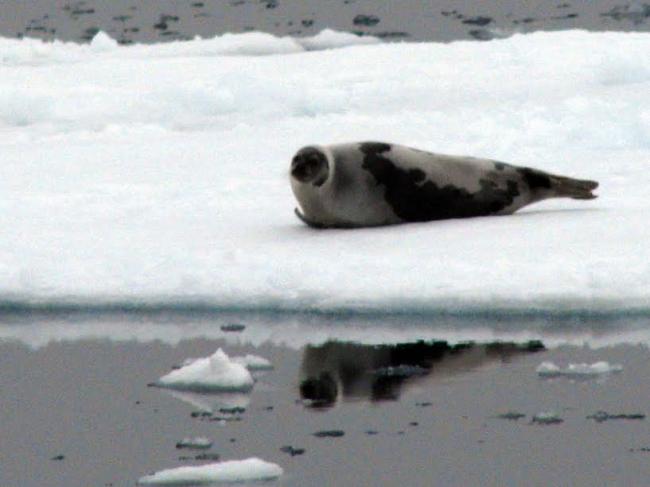
Canada: Poor ice conditions compel seals to move to thicker ice grounds

| | Apr 19, 2017, at 04:39 am
Toronto, Apr 18 (IBNS): Officials from the Fisheries Department said that harp seals who usually reproduces in the Gulf of St. Lawrence, had been forced, this year, to move off coast of Newfoundland, which with abundant thick ice, provided a favourable reproduction condition to the species, media reports said.

According to Fisheries and Oceans Canada reports, the number of harp seal pups born in a year is estimated from time to time by using aerial surveys conducted in the spring, when the seals have pulled out onto the ice to have their pups.

Estimates of abundance of harp seals have been found using a population model that incorporates annual reproductive rates and periodic estimates of pup production as well as information on removals.

Scientist Garry Stenson says the seal herd is spread out over a much larger area than usual instead of congregating in a few areas.

Stevenson tweeted that he followed timing of births by identifying Newfoundland pups’ developmental stage.
 

(Reporting by Asha Bajaj)

Support Our Journalism

We cannot do without you.. your contribution supports unbiased journalism

IBNS is not driven by any ism- not wokeism, not racism, not skewed secularism, not hyper right-wing or left liberal ideals, nor by any hardline religious beliefs or hyper nationalism. We want to serve you good old objective news, as they are. We do not judge or preach. We let people decide for themselves. We only try to present factual and well-sourced news.

Support objective journalism for a small contribution.

